
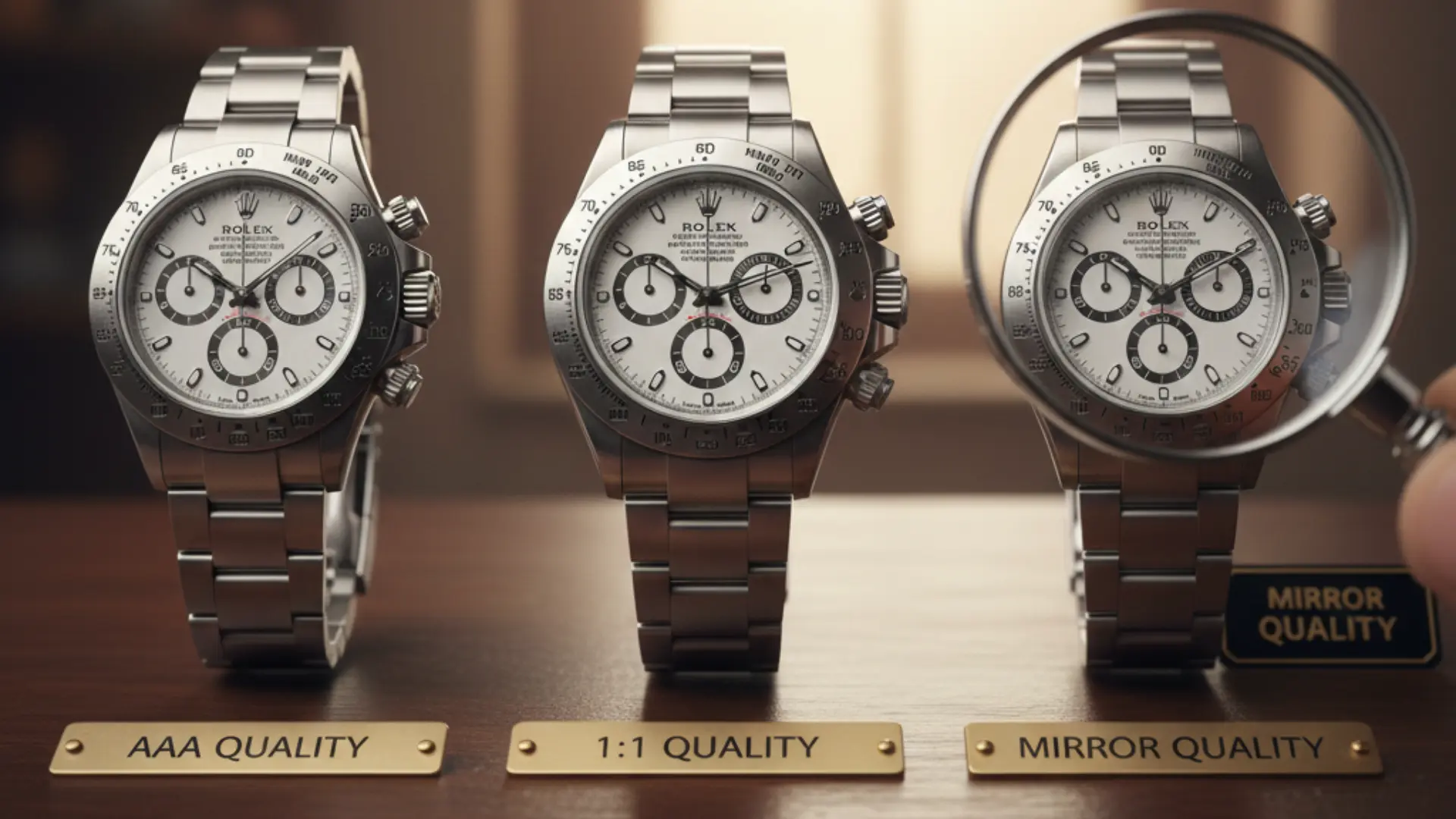
If you’ve ever dipped your toes into the world of replica watches or handbags, you know how confusing it can get. Sellers throw around words like “AAA,” “Super AAA,” “1:1,” and “Mirror Quality” as if everyone knows exactly what they mean. Honestly, it’s a mess. These labels get tossed around so much, they barely mean anything, and it’s easy to end up with something that’s not at all what you expected.
Let’s cut through the noise. This guide breaks down what all those terms really mean, so you can figure out what you’re looking at before spending your money. I’m not here to tell you to buy or not buy—just want you to know what’s out there and how to tell the difference.
Why All the Jargon?
Here’s the thing: none of these terms—“AAA,” “1:1,” whatever—are official. There’s no committee somewhere checking to make sure a “Super AAA” bag meets certain standards. It’s all marketing. One seller’s “AAA” could easily be another’s “mid-tier.” So, don’t get too caught up in the label. What matters is how the item actually looks and feels.
You can usually break replicas down into three main categories: Low-Tier (usually called AAA), Mid-Tier (often labeled Super AAA or 1:1), and High-Tier (true 1:1 or Mirror Quality). Let’s walk through each.
Tier 1: Low-Tier Replicas (“AAA” or “Mall Grade”)
This is the stuff you’ll see on sketchy websites, flea markets, or just spread out on a table on the street. Sellers love to call everything “AAA Quality” because it sounds impressive, but honestly, these are the cheapest of the cheap.
What you get:
Materials: Super cheap. Lightweight metal that feels hollow, plastic where there should be glass or ceramic, fake leather that’s stiff and plasticky.
Craftsmanship: You’ll spot wonky logos, crooked date windows, glue oozing out on handbags, and stitching that looks like it was done in the dark.
Movement: For watches, it’s almost always a basic quartz movement—battery-powered, with that obvious “tick-tick” second hand instead of the smooth sweep you want.
Weight & Feel: These feel light and flimsy. They just don’t have the heft or solid feel of the real thing.
Obvious Giveaways: Misspelled logos, weird fonts, off colors, and rough finishing.
Who buys these? Someone who just wants the look from a distance and doesn’t care about the details or how long it lasts. Basically, it’s a costume accessory.
Price: Usually $50 to $150.
Tier 2: Mid-Tier Replicas (“Super AAA” or “1:1”)
Now things get interesting. These are way better than the first tier, and this is where a lot of aggressive marketing happens. Sellers love to call these “1:1” The Ultimate Guide to Replica Tiers to make them sound perfect—but they’re not. Still, these are solid copies.
What you get:
Materials: A definite step up. Stainless steel feels heavier, leather is softer, and sometimes you get real sapphire crystal or ceramic—though maybe not the highest grade.
Craftsmanship: Logos are usually correct, stitching is neat, and The Ultimate Guide to Replica Tiers overall things look sharp. Most people wouldn’t spot the difference unless they really know what to look for.
Movement: Here’s where watches get better—often with reliable Japanese automatic movements like the Seiko NH35 or Miyota 8215. The second hand glides instead of ticks.
Weight & Feel: Much closer to the real thing. You pick it up, and it feels substantial.
Telling Details: You’ll still find little flaws—a weak or oddly colored lume, shallow engravings, or a date magnifier that’s just a bit off. Usually, you need the real thing next to it to spot these.
Who buys these? People who want something that looks and feels real day-to-day The Ultimate Guide to Replica Tiers but don’t want to pay for the absolute best replicas. You get a lot for your money.
Price: $200 to $400.
Tier 3: High-Tier Replicas (True “1:1” or “Mirror Quality”)
This is the top of the line. The factories making these are legends in the replica world—think Clean, VSF, ZF for watches. These are the replicas that people obsess over in collector forums, and sometimes even experts need a magnifying glass to spot the differences.